Why Employees Are the Better Influencers
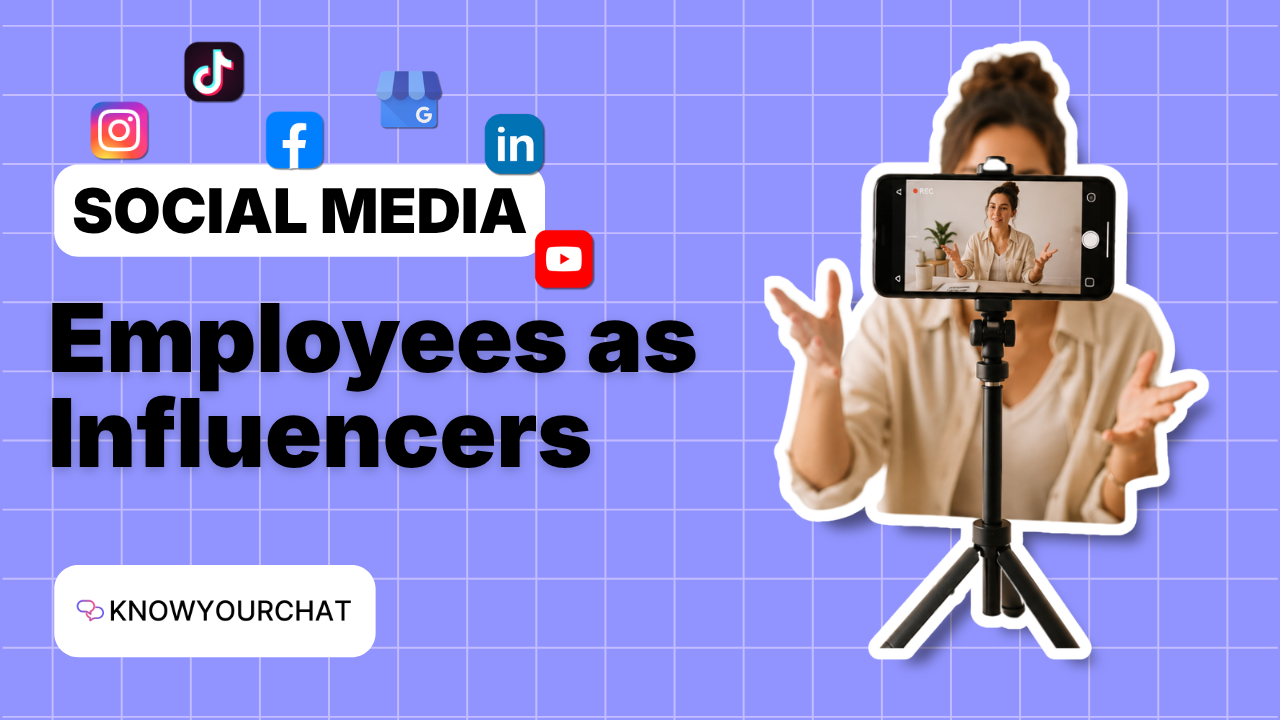
Companies invest millions every year in social media, content production, and influencer marketing. At the same time, something surprising is happening in many organizations: the content with the greatest reach, the most interactions, and the highest credibility often does not come from the company account.
It comes from their own employees. An apprentice films their daily work. A project manager reports on a client project. An employee shares a look behind the scenes. And suddenly that post gets more attention than weeks of professional corporate communication.
So the question is no longer whether employees should become visible on social media. The real question is:
Why do people often trust employees more than companies themselves?
The trust problem of modern corporate communication
Never before have companies been able to publish as much content as they can today. At the same time, winning attention and trust is becoming increasingly difficult. The reason is simple: people now know how marketing works. They recognize advertising messages. They recognize glossy communication. They recognize perfectly polished corporate language. And that is exactly why they react with growing skepticism.
That does not mean companies should stop communicating. It simply means that classic corporate communication often appears less credible today than personal experiences.
When a company claims to be a good employer, people take note. When an employee shows why they enjoy working there, people believe it. That difference is enormous.
Why people follow people – not logos
Social media was never originally made for companies. Platforms like Instagram, LinkedIn, TikTok, and Facebook were created so people could interact with people. Little has changed about that to this day.
The algorithms also favor content that generates genuine interactions. People comment on people. They respond to personalities. They are interested in stories. A company logo cannot tell a story.
The people behind it can. That is why personal accounts often achieve significantly better results than pure company profiles. Not because the content is necessarily better. But because it feels more human.
LinkedIn shows this development particularly clearly
On hardly any other platform can this shift be observed as clearly as on LinkedIn. Many company pages invest considerable resources in their communication and still often achieve less reach than individual employees or executives.
The reason is simple: on LinkedIn, people primarily follow other people. They are interested in experiences, opinions, insights, and personal stories. While company profiles often communicate formally, personal accounts offer exactly what social media was originally about: real perspectives.
Anyone who uses LinkedIn regularly quickly recognizes this pattern. A post by a CEO about an important company decision often gets significantly more interactions than the company's official press release. An employee reporting on an exciting project often generates more attention than the company page itself.
That does not mean company profiles are becoming unimportant. They continue to play an important role as a central source of information. But the real reach is increasingly created by the people behind the brand.
The rise of the social CEO
This development is particularly visible with the so-called social CEO. More and more managing directors, founders, and executives are themselves becoming relevant voices on LinkedIn. This is not about becoming an influencer. It is about making visible who stands behind a company. People want to know:
- Who makes the decisions?
- Which values does the company stand for?
- What vision is the leadership pursuing?
- How does management think about current developments?
This is exactly where trust and credibility are built. A CEO who regularly shares insights into their company often reaches more people than the company page itself. At the same time, an effect emerges that classic corporate communication can hardly create:
Closeness.
People do not just buy products or services. They buy trust. And trust often grows where people become visible. That is why more and more companies are deliberately investing in building social CEOs. Not as an end in itself. But because leadership visibility is increasingly becoming a competitive advantage.
The rise of employee generated content
For exactly this reason, one term is gaining more and more importance:
Employee Generated Content (EGC).
This refers to content created or published by employees themselves. It is not about perfect advertising videos. Quite the opposite. The most successful formats are often surprisingly simple. A quick look behind the scenes. An honest account of an experience. A project that was just completed. An apprentice documenting their daily routine. An employee explaining how a product is made.
It is exactly this kind of content that feels authentic. And authenticity is now one of the most valuable currencies on social media.
Why employee generated content and social CEOs belong together
Many companies look at these developments separately. In fact, both approaches pursue the same goal: making people visible.
Whether CEOs, team leads, apprentices, or project managers: they can all help give a brand a face. The more people within a company become visible, the greater the reach of the entire company becomes.
At the same time, a much more authentic picture emerges than through classic corporate communication alone. The strongest brands of the coming years will therefore probably not be the ones that talk about themselves the most. But the ones where the people behind the brand become visible.
Why employees often achieve better reach
Many companies are currently experiencing an interesting phenomenon: a LinkedIn post by an employee sometimes reaches more people than the company page itself. There are several reasons for this.
For one, platforms often weight personal content more heavily than company posts. For another, significantly more genuine interactions occur. People prefer discussing with a person rather than with a brand. On top of that comes a psychological effect.
When an employee talks about their work, an advance of trust is automatically created. The content feels less staged and closer to reality. Especially in times of AI-generated content, this factor is becoming ever more important. The more artificial content is created, the more valuable real perspectives become.
Why employee generated content goes far beyond recruiting
Many companies initially associate employee content with employer branding. But that falls short. Of course, employees can help attract new applicants. The real strength, however, lies much deeper.
Employees can build trust, make expertise visible, make brands more approachable, and strengthen customer relationships. This is becoming increasingly important, especially in B2B. People rarely buy from logos. They buy from people.
Anyone who regularly sees competent and likeable faces from a company automatically develops a stronger bond with the brand. This effect is visible every day, especially on LinkedIn. Many successful B2B companies today gain visibility not primarily through their company page, but through the reach of their employees and executives.
Why many companies still fail
Although the advantages are obvious, many companies do not succeed with employee generated content. The reason is usually not a lack of motivation. The reason is a lack of structure. Questions often arise such as:
- Who is allowed to post?
- Which content is allowed?
- Who reviews posts?
- Which tone fits the brand?
- How is quality ensured?
The result: either no content is created at all. Or everyone does something different. Neither rarely leads to long-term success. Because employee generated content only works sustainably when freedom and structure come together.
The biggest challenge: scaling authenticity
This is exactly where it gets interesting. Because authenticity cannot be mandated. Nobody wants to see employees who are obviously publishing marketing copy. At the same time, companies need a certain framework. The challenge, then, is to make employees visible without turning them into corporate spokespeople.
The best examples strike exactly this balance. They give employees orientation without restricting their personality. This creates something that classic corporate communication can hardly deliver: credibility.
Why AI does not replace employee generated content
With the rise of AI, there is often a concern that personal content could lose importance. In fact, the opposite is currently happening. The easier content can be produced, the more important the person behind the content becomes.
AI can write texts. AI can deliver ideas. AI can develop formats. What AI cannot replace are personal experiences.
An employee reporting on a successful project creates trust. An executive giving insights into decisions creates closeness. An apprentice showing their daily routine conveys reality. That is exactly why people will remain the most important resource of any social media strategy in the future.
What companies should do now
Most companies already have the best influencers. They just rarely sit in the marketing department. They work in sales. In customer service. In production. In project management. Or in training.
The real task, therefore, is not to look for new influencers. It is to make the existing ones visible. Those who give employees the opportunity to share their perspectives create something no advertising campaign can buy: genuine credibility.
How KNOWYOURCHAT supports companies with this
This is exactly where KNOWYOURCHAT comes in. Because the challenge is not motivating employees to post. The challenge is organizing employee content professionally.
The more employees, executives, and social CEOs actively communicate, the more important clear processes become. With KNOWYOURCHAT, companies can plan, coordinate, and approve content centrally without losing the authenticity of the posts.
Employees get support in creating their content, while companies simultaneously keep an overview of campaigns, platforms, and approvals. The AI Crew helps develop ideas further, polish wording, or adapt content for different platforms.
This creates a system that supports personal communication instead of replacing it. And that is exactly where the difference lies. It is not the brand talking about itself. It is the people behind the brand.
Conclusion
A company's most successful influencers often do not need to be found first. They already work there. Employees have something that companies alone can hardly build: trust.
While brands fight for attention, people create closeness, credibility, and genuine interactions. LinkedIn, employee generated content, and the trend towards the social CEO currently show very clearly where corporate communication is heading.
Away from anonymous company profiles. Towards the people behind the brand. That is why the most successful companies of the coming years will probably not be the ones that post the most. But the ones that give their employees and executives the stage on which trust can grow.