Social SEO: Why Social Media Is Becoming Part of Your SEO Strategy

Until just a few years ago, the division of responsibilities in marketing was clear. The SEO team focused on the company website. The social media team created content for Instagram, TikTok or YouTube.
Although both disciplines pursued the same goal—increasing visibility—they often relied on different strategies, metrics and tools. That separation is now beginning to disappear.
Google now allows businesses to connect content from Instagram, TikTok, YouTube and X as Platform Properties in Google Search Console. For the first time, companies can see which search queries lead users to their social media content through Google Search, including clicks and impressions.
At first glance, this may seem like just another technical update. In reality, it reflects a much bigger shift.
Google is making visible what has been developing for years: social media is no longer just a channel for reach. Social media content is increasingly becoming part of organic search.
What Is Social SEO?
The term Social SEO has become increasingly common, yet it's still often misunderstood.
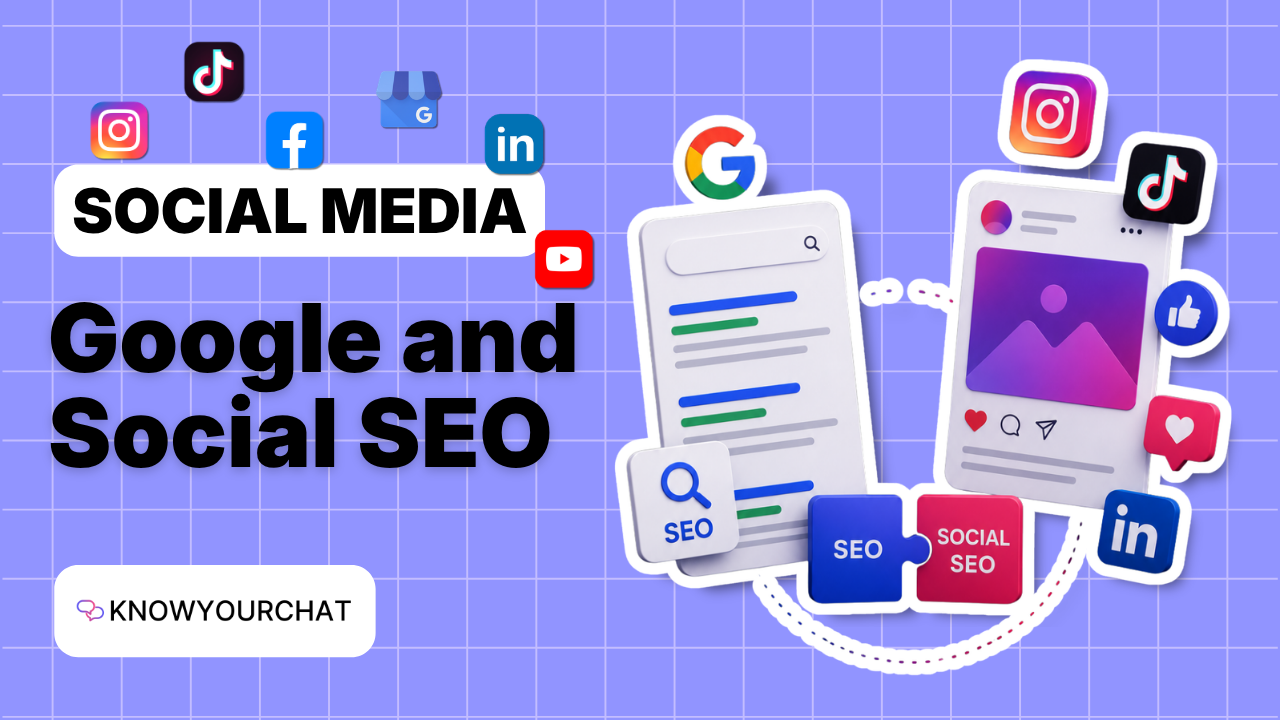
At its core, Social SEO refers to optimising social media content for search—both within social platforms themselves and in traditional search engines such as Google. Successful content is therefore designed around search intent, regardless of where users are searching.
While traditional SEO focuses primarily on websites, Social SEO extends that approach to content published on platforms such as Instagram, TikTok, YouTube or LinkedIn.
This includes elements such as compelling captions, relevant keywords, descriptive video titles, subtitles and clearly structured content that helps both people and search systems understand what a post is about.
The goal isn't to treat social media like a website. Instead, it's about creating content that remains discoverable over time - whether users search on Google or directly within a social platform. This shift has been taking place for quite some time.
Younger audiences, in particular, increasingly use TikTok or Instagram as search engines. They look for restaurants, travel destinations, product recommendations or tutorials without opening Google first.
At the same time, Google is indexing more and more public social media content and displaying it directly in its search results. As a result, the boundaries between search engines and social media are becoming increasingly blurred.
Why Google Is Sending an Important Signal
With the introduction of Platform Properties, Google is taking the next step.
For the first time, businesses can analyse their social media content in Google Search Console much like they analyse traditional websites. This includes metrics such as search queries, impressions, clicks and average search position.
However, the real innovation isn't the data itself. It's what that data represents.
Google no longer treats social media platforms as isolated ecosystems. Instead, it recognises social media content as a measurable part of organic search.
For marketing teams, this represents a significant shift in perspective. Until now, social media performance was typically evaluated using platform-specific metrics such as reach, likes, comments and shares. Now, another dimension has been added.
How visible is our content outside Instagram, TikTok, LinkedIn or YouTube?
That question is about to become much more important.
Content No Longer Ends in the Feed
Perhaps this is the most significant change of all. For a long time, social media was a fast-moving channel.
A post would be published, generate attention for a few days and then disappear into the feed. Today, that's no longer the case.
A well-optimised Instagram Reel can still be discovered through Google weeks or even months later. A YouTube Short may answer a specific search query. A TikTok video can suddenly appear alongside traditional websites in Google's search results. As a result, content now has a much longer lifespan.
For businesses, this has the potential to fundamentally change their content strategy. Content is no longer created solely for the moment it is published. It has the opportunity to continue reaching new audiences long after it first goes live.
That also increases the importance of topic selection, content structure and search intent. Companies that want to remain visible over time must create content that answers real questions—not simply follows the latest trends.
Why SEO and Social Media Need to Work More Closely Together
Platform Properties don't just change the way businesses measure social media performance. They also raise a fundamental question:
Who is ultimately responsible for organic visibility?
In many organisations, SEO and social media teams still operate largely independently. While SEO specialists analyse the search terms people use on Google, social media teams often plan campaigns, editorial calendars and content strategies without incorporating those insights. That approach is becoming increasingly outdated.
What happens if an Instagram Reel ranks higher for an important keyword than your own landing page? Or if a YouTube Short answers the exact search query you've only been targeting with blog articles?
Search engine optimisation no longer ends with your website. At the same time, social media is no longer limited to generating engagement within a platform.
Both disciplines are increasingly working towards the same objective: creating content that reaches people precisely when they're looking for answers.
What Businesses Should Do Next
The new capabilities within Google Search Console make one thing clear:
Social SEO should no longer be treated as a side topic.
Businesses that want to approach social media strategically should begin rethinking their existing processes.
That includes:
- bringing SEO and social media teams closer together
- using keyword research beyond website optimisation
- creating Reels, Shorts and TikToks around genuine search intent
- regularly analysing Google search data and using those insights to shape future content
- evaluating social media content not only by its reach, but also by its long-term discoverability
The last point, in particular, is often underestimated.
A post with only moderate reach can become far more valuable than a short-lived viral hit if it continues attracting visitors through Google Search for months.
Content should no longer be created solely for the feed. It should answer the questions people are actively searching for.
Why Social SEO Is Changing Content Strategy
Social SEO doesn't mean stuffing captions with as many keywords as possible. Nor does it mean copying traditional SEO copy directly into Instagram or TikTok posts. The real focus is search intent.
What questions is your audience asking? What problems are they trying to solve? What information are they looking for—and in what format?
These questions should no longer shape only your SEO strategy. They should also influence your social media content planning.
Businesses that create content around genuine search demand don't just improve their chances of appearing in Google Search. They also tend to produce more relevant, valuable content for social media itself.
As a result, search engines and social media platforms continue to move closer together.
How KNOWYOURCHAT Supports Social SEO
Social SEO begins long before a post is published.
Businesses that want to create content capable of reaching both people and search engines first need to understand what their audience is searching for, which topics are shaping their market and which questions are truly worth answering.
That's exactly where KNOWYOURCHAT's AI Crew comes in.
Because it understands your company's preferred tone of voice while taking current market developments and competitor activity into account, content ideas aren't generated at random—they're built on strategic context.
Users can ask the AI Crew which topics are currently gaining relevance, what their audience is searching for or which content ideas best align with a specific keyword or subject.
Building on those insights, the AI Crew helps create compelling hooks, captions and video scripts for Instagram Reels, TikTok videos and YouTube Shorts—all tailored to your brand and the platform you're publishing on.
Successful Social SEO requires more than individual performance metrics. The real value lies in turning insights into better decisions for future content.
KNOWYOURCHAT Insights help make that possible by showing how individual posts perform over custom time periods, making it easier to identify successful topics, formats and content ideas that can be refined over time.
After all, great content rarely happens by chance. It emerges when market knowledge, audience understanding and real performance insights come together. That's exactly what KNOWYOURCHAT was built for.
Want to stop creating content based on guesswork? Sign up for KNOWYOURCHAT for free and discover how our AI Crew helps you identify relevant topics, better understand search intent and create content that truly resonates with your audience.
Conclusion
The new Platform Properties in Google Search Console are far more than another reporting feature. They demonstrate that social media content has become an integral part of organic search.
For businesses, this represents a fundamental shift in perspective. Content no longer stops working once it disappears from the feed. It can continue attracting new audiences weeks or even months after publication—provided it answers relevant questions and aligns with what people are genuinely looking for.
That's why Social SEO will continue to grow in importance over the coming years. Not because search engines will replace traditional websites, but because the definition of high-quality content is evolving.
Businesses that want to build long-term visibility need to think not only about where they publish content, but also about what their audience is actually searching for.
Companies that bring SEO and social media closer together create the foundation for content that delivers more than reach—it remains relevant over time. Because the best content is never accidental. It emerges where audience understanding, search intent and great storytelling come together.