Instagram Trial Reels: Why We Should Test Content Before Publishing

Every social media manager knows this feeling.
The post is ready. The caption has been refined multiple times. The video has been edited. Yet just before hitting Publish, one question remains:
Will this post actually perform?
Until recently, there was only one way to find out—by publishing it.
With Instagram Trial Reels, creators and businesses now have the opportunity to change that. Instead of immediately sharing a Reel with their existing audience, they can first test it under real-world conditions. This allows them to optimise content based on actual performance data while experimenting with new formats without putting their community engagement at risk.
Instagram CEO Adam Mosseri sums up the idea behind the feature perfectly: creators should feel more comfortable experimenting with new ideas without worrying about how their existing audience might react. Encouraging that willingness to experiment is exactly what Instagram hopes to achieve.
What Are Trial Reels – and Why Are They So Powerful?
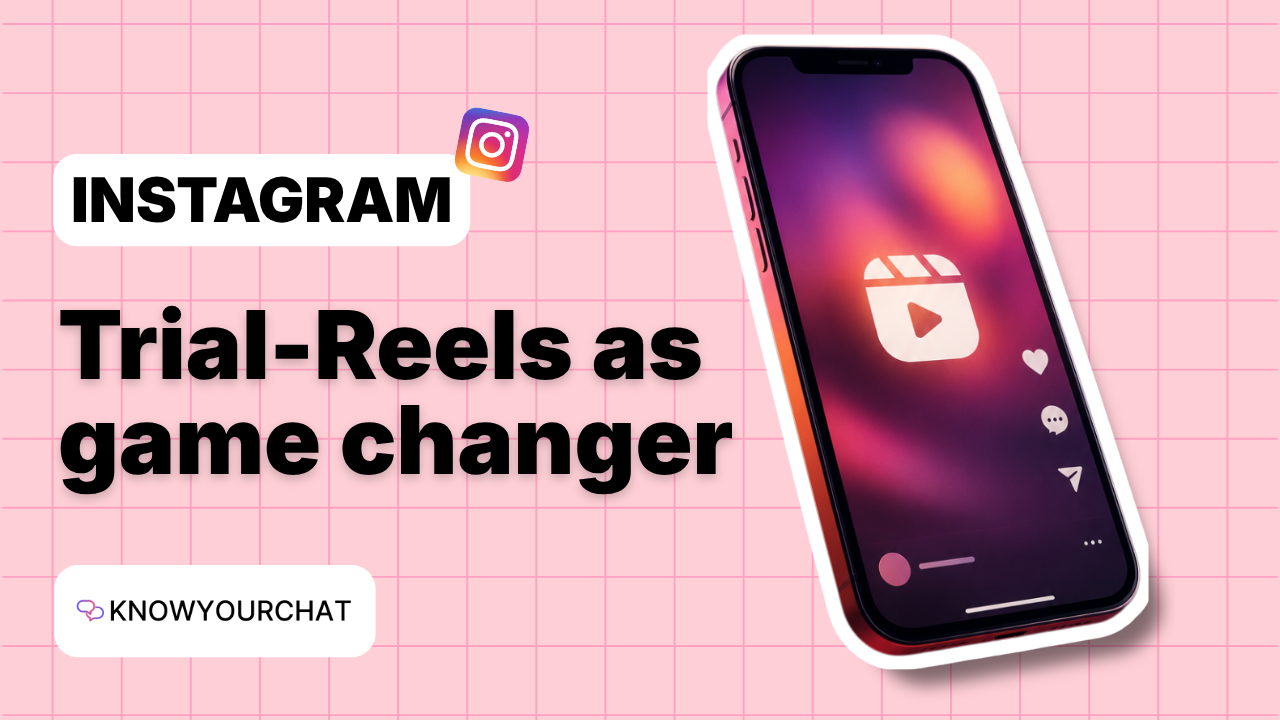
Trial Reels allow businesses and creators to show a Reel exclusively to people who don't already follow their account. During this testing phase, the Reel doesn't appear in the feed, profile grid or Reels tab for existing followers. Instead, Instagram collects feedback from users who have never interacted with the account before.
That's what makes Trial Reels fundamentally different from regular Reels.
Existing followers often evaluate content through the lens of an established relationship with a brand. New audiences don't. Within just a few seconds, they decide whether a Reel captures their attention or whether they keep scrolling. That initial reaction provides valuable insight into how content performs outside your existing community.
If the Reel performs well, it can then be published normally. Only then does it appear on your profile and become visible to your followers. Instagram also provides detailed performance metrics—including views, likes, comments and shares—giving creators a solid foundation for deciding whether a Reel is ready for a wider audience.
From a marketing perspective, the process strongly resembles traditional A/B testing. Instead of testing landing pages or ad creatives, businesses can now validate social media content under real-world conditions before making it part of their regular publishing strategy.
Why Instagram Is Investing in Trial Reels
The growing rollout of Trial Reels is no coincidence.
For years, Instagram has observed that many creators and businesses have become increasingly cautious about what they publish. New formats are often only adopted after they've already proven successful elsewhere. Concerns about poor reach or negative feedback frequently lead to safer—and ultimately more predictable—content.
Trial Reels are designed to change that.
Instead of discouraging experimentation, Instagram wants to create an environment where testing new ideas feels less risky. Because Trial Reels are initially shown only to non-followers, creators can experiment without immediately exposing every new concept to their existing audience.
For businesses, that's a significant shift.
Not every piece of content needs to be perfect from day one. What's far more important is understanding which ideas genuinely resonate with people. Trial Reels provide a protected environment for doing exactly that, making experimentation a natural part of the content creation process.
Instagram's ambition extends beyond helping individual creators.
The platform depends on fresh, engaging content. If businesses and creators only rely on formats that have already proven successful, the overall user experience inevitably becomes less diverse and less creative.
Trial Reels are designed to counter exactly that trend. New ideas have the opportunity to prove themselves with completely new audiences first. The result is more experimentation, more creativity—and ultimately better content for everyone using the platform.
What Should You Test with Trial Reels?
Trial Reels work best when there are multiple ways to tell the same story.
The goal isn't to publish identical videos over and over again. Instead, businesses should deliberately test different creative approaches.
For example:
- different hooks during the first few seconds
- alternative storytelling structures
- different calls to action
- new editing styles or video formats
- unexpected perspectives on familiar topics
The opening moments of a Reel are particularly important. In many cases, users decide within seconds whether they continue watching or move on to the next video. Even small changes to the introduction can have a significant impact on overall performance.
Imagine a company promoting a new product.
One version opens by introducing the product immediately.
Another begins by highlighting a problem many people experience before presenting the solution.
Both videos communicate the same message—but they engage viewers in completely different ways.
That's where Trial Reels reveal their greatest strength.
Instead of relying solely on experience or intuition, businesses can make decisions based on actual audience behaviour.
Trial Reels Offer More Than Just Reach
Many businesses still judge the success of a Reel almost exclusively by the number of views it receives.
In reality, metrics such as average watch time, shares, comments and engagement rate often provide much more meaningful insights.
A Reel with slightly fewer views may generate significantly more interactions or keep viewers watching for longer than another version. Those differences help identify patterns that can improve future content.
Businesses that use Trial Reels consistently shouldn't analyse these metrics in isolation. Over time, recurring trends become visible.
Which hooks consistently capture attention?
Which storytelling approach leads to longer watch times?
Which call to action generates the most engagement?
Those insights are often far more valuable than reach alone.
When Should You Publish a Trial Reel?
Once the testing phase is complete, Instagram provides detailed performance insights, including views, likes, comments, shares and average watch time. These metrics offer a much clearer picture of whether a Reel is likely to perform well with your existing audience.
If the results are promising, the Trial Reel can then be published as a regular Reel. Only at that point does it appear on your profile, in the Reels tab and in your followers' feeds.
This fundamentally changes the publishing process.
Instead of deciding whether to share an idea with your entire community straight away, businesses can first gather meaningful insights and make a data-driven decision based on real audience behaviour.
Test, Don't Guess: A Smarter Approach to Social Media
For years, social media has followed a simple pattern.
Create content.
Publish it.
Hope it performs.
Trial Reels introduce a crucial new step.
They transform publishing into a structured testing process, giving businesses the confidence to experiment while reducing the risk of abandoning creative ideas too early simply because they didn't perform as expected.
This is particularly valuable for businesses.
Many social media posts go through multiple approval rounds before they're published. As a result, the safest option often wins—not necessarily the most creative one.
Trial Reels make it possible to validate bold ideas before presenting them to your existing audience. That creates more confidence, encourages experimentation and ultimately leads to better content.
How KNOWYOURCHAT Supports the Entire Workflow
A successful testing strategy begins long before content is published.
With KNOWYOURCHAT, posts can be created either manually or through the AI Studio. The AI Crew helps generate multiple hooks, storytelling approaches and calls to action, making it easy to develop different versions of the same content.
When it's time to publish, users can decide directly within KNOWYOURCHAT whether a Reel should be published immediately or first released as an Instagram Trial Reel.
This creates a seamless workflow—from the initial content idea and multiple creative variations to a data-driven decision about which version should ultimately be shared with your audience.
The performance of Trial Reels can then be analysed directly within the KNOWYOURCHAT Insights dashboard. Metrics such as views, average watch time, likes, comments and shares are available in one central location, making it easy to compare different content variations and identify recurring patterns.
Instead of evaluating individual posts in isolation, businesses gain valuable insights into what consistently resonates with their audience—and can continuously refine their content strategy based on real data.
Curious to see how it works? Sign up for KNOWYOURCHAT for free and discover how our AI Crew helps you create content faster, test different creative approaches and build a more effective social media strategy.
Conclusion
Trial Reels are one of those Instagram features whose true value only becomes apparent once you look beyond the surface.
They're not simply another way to test reach.
They fundamentally change how businesses can develop content.
Instead of relying solely on experience or intuition, ideas can now be validated under real-world conditions before being rolled out to an existing audience.
At a time when social media has become increasingly strategic, that's a significant step forward.
The best-performing content rarely happens by accident. It results from strong ideas, continuous testing and a willingness to learn from the data.
Perhaps that's the greatest strength of Trial Reels.
They encourage businesses to approach social media more strategically—not by publishing and hoping, but by testing, learning and continuously improving.