YouTube Is Becoming More Like TikTok: Why Businesses Should Rethink Their Video Strategy

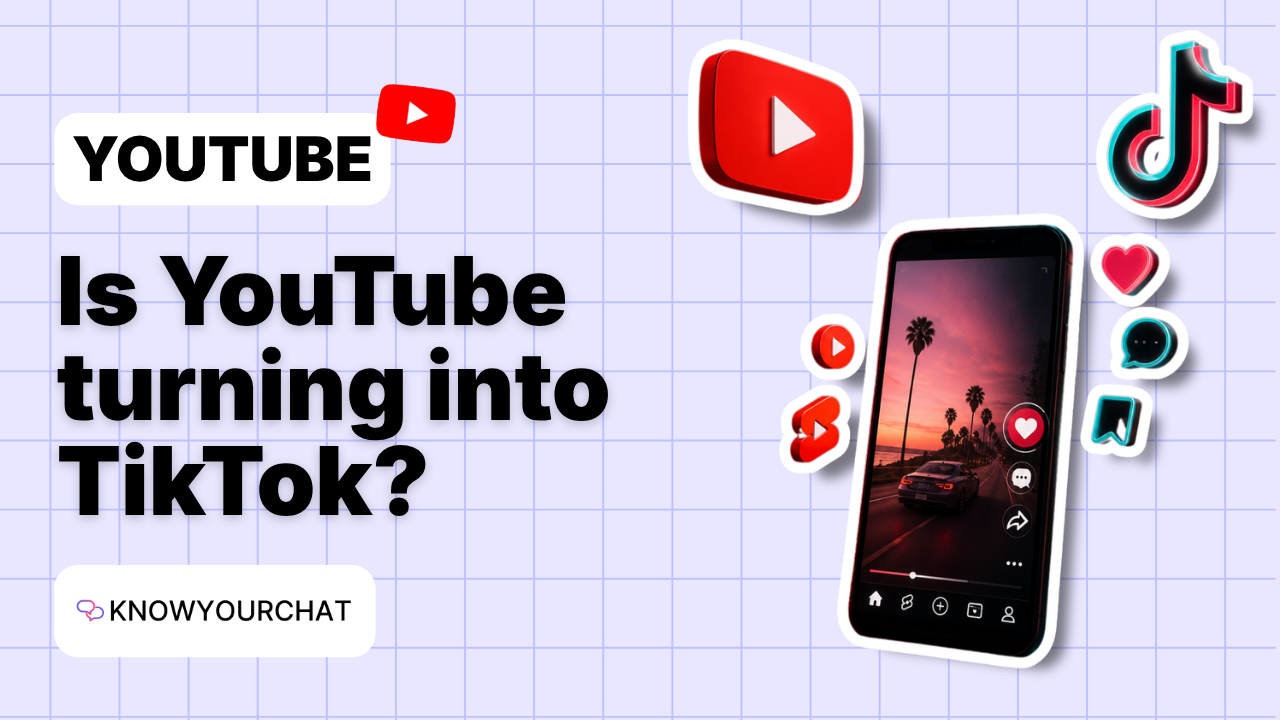
Anyone scrolling through YouTube Shorts these days may find themselves doing a double take.
A new Clear Screen mode removes almost all on-screen controls, putting the content itself front and centre. Videos can now be played at double speed with a simple press and hold. The familiar thumbs-up button has been replaced with a heart, while the dislike button disappears entirely. Instead, YouTube is introducing more specific feedback options such as "Not interested" and "Don't recommend this channel."
Anyone who regularly uses TikTok will recognise many of these features immediately.
And that's no coincidence.
YouTube describes the updates as part of its effort to create a "cleaner and more intuitive Shorts experience." At the same time, the company acknowledges that the way people consume and interact with short-form video has changed significantly. The new features are designed to reflect those evolving habits.
Behind these updates lies a much bigger story than a handful of new interface elements. They highlight how social media platforms are increasingly adapting to user behaviour—and why the differences between TikTok, Instagram Reels and YouTube Shorts continue to shrink.
YouTube Isn't Following TikTok – It's Following Its Users
For years, the social media industry has debated which platform introduced which feature first.
Instagram launched Stories.
TikTok turned vertical short-form video into a global phenomenon.
Instagram responded with Reels.
YouTube invested heavily in Shorts.
At first glance, it looks like an endless race between competing platforms.
A closer look reveals something else entirely.
The real driving force isn't competition.
It's user behaviour.
People who spend time on TikTok develop habits. Certain gestures, icons and navigation patterns become second nature. A heart represents appreciation. Pressing and holding the screen speeds up a video. A clean interface removes distractions and keeps the focus on the content itself.
Those expectations don't disappear when users switch to another platform.
They carry them along.
That's exactly why YouTube explains that many of its latest updates are based directly on community feedback. The goal is to make Shorts more intuitive and better aligned with how people naturally consume short-form content.
That also changes the way we should interpret these updates.
YouTube isn't simply copying TikTok.
It's adapting to user behaviour that TikTok has helped shape over the past several years.
Why These Changes Matter
Taken individually, the new features may seem relatively minor.
Together, however, they tell a much bigger story.
The new Clear Screen mode temporarily removes icons, text and interface elements, allowing viewers to focus entirely on the video itself.
The ability to play Shorts at double speed by pressing and holding the screen follows the same philosophy. Users gain greater control over how quickly they consume content.
Perhaps the most interesting change, however, concerns user feedback.
Within Shorts, YouTube is replacing the dislike button with more specific options such as "Not interested" and "Don't recommend this channel." According to YouTube, these choices provide much more meaningful information about the type of content users actually want—or don't want—to see. A simple thumbs-down can mean many different things, ranging from poor audio quality to personal taste.
This change illustrates how recommendation algorithms continue to evolve.
They are becoming less interested in simple yes-or-no signals.
Instead, they are trying to understand why people reject certain content.
Many Businesses Avoid TikTok – Yet Benefit from the Same Mechanics
This is where the discussion becomes particularly relevant for businesses and content creators.
With around 1.8 billion monthly active users, TikTok has become one of the world's largest social media platforms. At the same time, many organisations continue to approach the platform with caution.
Data privacy concerns.
Internal compliance requirements.
The ongoing discussion surrounding its Chinese parent company, ByteDance.
For that reason, public institutions, municipalities and many industrial businesses deliberately choose not to operate a TikTok account.
That doesn't mean they have abandoned short-form video.
Quite the opposite.
Many are already publishing Reels on Instagram or Shorts on YouTube on a regular basis.
And this is where the landscape begins to shift.
The more YouTube Shorts adopts familiar interaction patterns, the easier it becomes for businesses to leverage successful short-form video concepts—without necessarily having to establish a presence on TikTok.
For many organisations, that could prove to be a significant advantage.
They benefit from the mechanics that have made short-form video so successful while avoiding the need to expand their communication strategy to yet another platform.
Platforms Are Becoming More Alike – Great Content Matters More Than Ever
Perhaps that is the most important takeaway from YouTube's latest Shorts updates.
Only a few years ago, the major social media platforms were clearly distinguishable from one another.
Today, those boundaries are becoming increasingly blurred.
Vertical video has become the standard.
Personalised feeds are now expected.
AI-powered recommendations continue to evolve in similar directions across almost every major platform.
Even the way users interact with these platforms is becoming increasingly consistent.
For businesses, this represents a fundamental shift.
Competition is taking place less and less between platforms.
It is increasingly taking place between pieces of content.
Why YouTube Shorts Is Becoming More Attractive for Businesses
Compared to many other platforms, YouTube offers one major advantage: for most businesses, it's already an established part of their digital strategy.
Many organisations already have a YouTube channel featuring product demonstrations, explainer videos or corporate content. They don't need to build a new audience from scratch. With Shorts, YouTube is expanding that existing ecosystem by adding a format that increasingly reflects how people consume content today.
This creates new opportunities.
A short-form video can capture attention and lead viewers directly to a company's channel, where they can discover more in-depth content, product videos or interviews. This seamless connection between short-form and long-form video remains one of YouTube's biggest strengths.
While TikTok is primarily built around fast-paced content consumption, YouTube allows businesses to guide potential customers much further along the customer journey—all within the same platform.
For companies offering complex products or services, that's a significant advantage.
Content Matters More Than Platforms
Marketing discussions still tend to focus on one recurring question:
Which platform offers the greatest reach?
TikTok.
Instagram.
YouTube.
LinkedIn.
Yet the real challenge is beginning to shift.
As platforms become increasingly similar in terms of user experience, recommendation algorithms and short-form video formats, the choice of platform becomes less important.
The quality of the content becomes more important.
A great short-form video remains a great short-form video.
It educates.
It entertains.
It surprises.
Or it tells a story that keeps people watching until the very end.
That's exactly why many creators have noticed that successful videos increasingly perform well across multiple platforms. The same piece of content can generate strong results on TikTok, Instagram Reels and YouTube Shorts with only minor adjustments.
For businesses, this changes the strategic conversation.
The key question is no longer:
"Where should we publish this?"
Instead, it becomes:
"What story do we want to tell?"
Businesses that can answer that question convincingly are in a much stronger position to distribute their content across multiple platforms than they were just a few years ago.
Now Is the Right Time to Review Your Video Strategy
The latest YouTube Shorts updates provide an excellent opportunity to reassess your current content strategy.
Are you already publishing short-form videos on a regular basis?
If so, are you limiting them to a single platform—or are you making the most of them across multiple channels?
Many businesses invest significant time and resources into producing high-quality videos, only to publish them exclusively on Instagram or YouTube. As short-form formats continue to converge, a cross-platform strategy often makes far more sense.
It's also worth taking another look at your existing YouTube channel.
Do you already have longer videos that could be repurposed into Shorts?
Could product demonstrations, interviews or event recordings be transformed into engaging short-form content?
Many organisations are sitting on a valuable library of video content without fully realising its potential.
How KNOWYOURCHAT Helps
With every new update, the major social media platforms become a little more alike.
That doesn't make social media easier for businesses.
If anything, it makes strategy even more important.
Today's challenge isn't simply producing more content. It's identifying relevant topics, developing compelling stories and adapting them for different platforms without losing consistency.
That's exactly where KNOWYOURCHAT's AI Crew comes in.
It helps businesses identify emerging trends, generate content ideas, create posts in the desired brand voice and transform a single topic into multiple formats—from blog articles and LinkedIn posts to scripts for Instagram Reels, TikTok and YouTube Shorts.
The result isn't a strategy built around individual platforms.
It's a content strategy designed to work wherever your audience is.
Curious to see how it works? Sign up for KNOWYOURCHAT for free and discover how the AI Crew helps you create relevant, high-quality content for your social media channels faster than ever before.
Conclusion
The latest YouTube Shorts updates reveal something far more significant than a handful of new features.
Social media platforms are increasingly evolving around the expectations and habits of their users.
YouTube isn't simply adopting ideas from TikTok.
It's responding to changing user behaviour by creating an experience that already feels familiar to millions of people.
For businesses, that's good news.
Companies that have deliberately avoided TikTok now have access to a platform that embraces many of the same successful short-form video mechanics while offering the advantages of an established video ecosystem.
The biggest takeaway, however, goes beyond any individual feature.
The more similar platforms become, the less success depends on choosing the "right" channel.
Instead, success depends on creating content that is relevant, tells meaningful stories and gives people a reason to keep watching.
Perhaps that's the most important lesson from YouTube's latest update.
Platforms may continue to look more alike—but truly outstanding content will always stand out.