W Social: Does Europe Need Its Own Social Network?

Facebook, Instagram, TikTok, LinkedIn, X, Reddit, and Snapchat are already competing for the attention of billions of people. Any new platform entering the market must answer one simple question: Why should anyone switch?
That is precisely the challenge W Social is currently taking on. New social networks rarely fail because of a lack of ideas. More often, they struggle because people rarely change their digital habits.
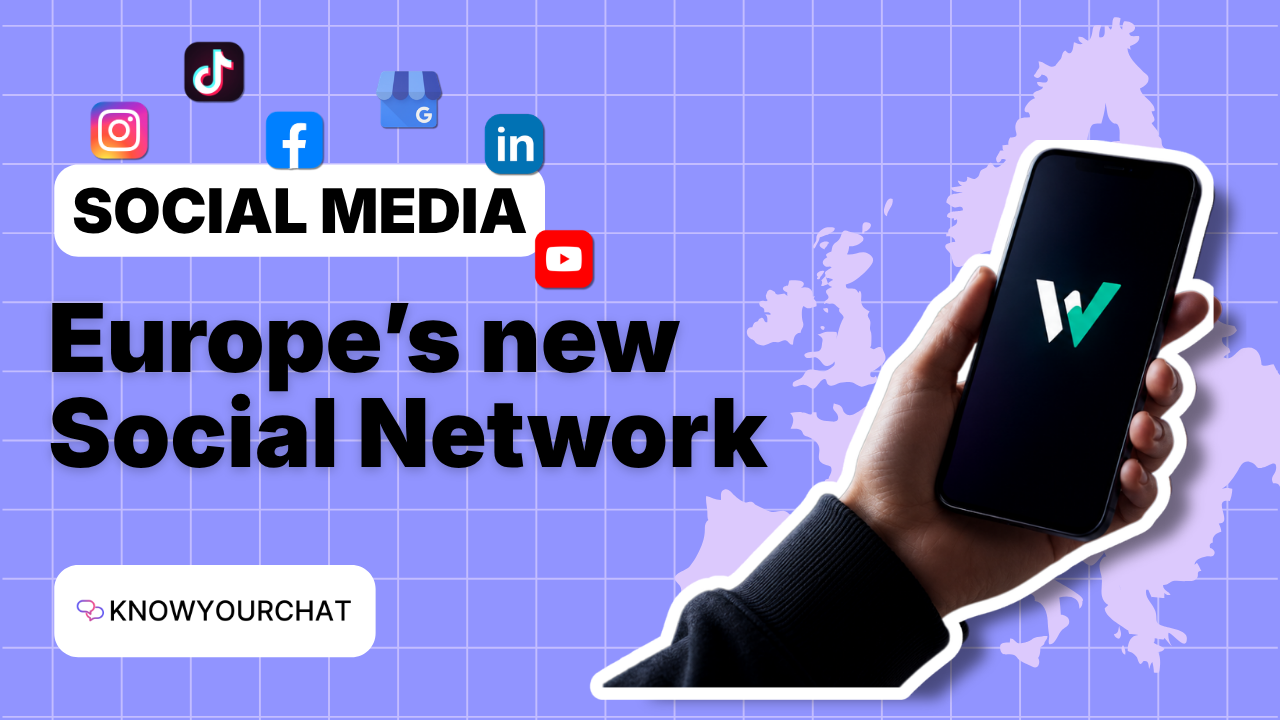
W Social, a new platform from Sweden, positions itself as a European alternative to the major global social networks. At the heart of its proposition are data privacy, European digital sovereignty, and a concept that has become increasingly important in recent years: trust.
While most social platforms focus on attracting as many users as possible, W Social is taking a different approach. Users are expected to be verified and validated. The “W” in the platform’s name stands for two concepts: Verified and Validated.
At first glance, that may seem like a branding detail. In reality, it represents the platform’s entire strategy.
The Real Problem Facing Social Media
W Social is entering the market at a time when social networks are facing challenges that barely existed a few years ago. Bots automatically distribute content. Fake accounts imitate real users. Artificial intelligence can generate convincing images and videos within minutes.
As a result, it is becoming increasingly difficult to determine who is actually behind a profile and whether the content being shared is authentic. This creates a problem that many platforms underestimated for years: Trust.
People want to know whether there is a real human being behind an account. That question has become especially important in political discussions, product recommendations, and corporate communication.
W Social aims to address exactly that issue. The platform seeks to create an environment where users can be confident about who they are interacting with.
Why the “W” Is More Than Just a Letter
According to the company, the “W” stands for Verified and Validated. The idea is straightforward. People should not simply be able to create a profile. They should also be able to prove that they actually exist. This immediately sets W Social apart from many established platforms.
While Facebook, Instagram, and TikTok spent years reducing barriers to entry, W Social is taking the opposite approach. The platform prioritizes quality over quantity. For anyone frustrated by spam, fake accounts, or bot activity, that concept is likely to sound appealing. At the same time, this is precisely where the debate begins.
The Goal: More Accountability in the Digital World
Verification on W Social is not just about reducing bots and fake profiles. The platform has a much broader objective.
According to its founders, identity verification is intended to improve the quality of discussions and reduce harmful behavior. The underlying belief is that people communicate differently when they know they cannot hide behind complete anonymity. This is not a new idea.
For years, policymakers, researchers, and platform operators have debated the relationship between anonymity and toxic behavior online. Hate speech, personal attacks, coordinated harassment campaigns, and targeted misinformation are often spread through accounts whose real identities remain unknown.
W Social wants to tackle this issue directly. Users who register must verify their identity. At the same time, the platform states that this information is not publicly visible. People can continue to interact under their chosen profile names, while the platform itself knows that a real person is behind every account.
The core assumption is simple: Greater accountability encourages more respectful behavior. Whether that assumption proves correct remains to be seen.
Its Greatest Strength May Also Be Its Biggest Weakness
The verification process has already sparked considerable debate online. Many users welcome the effort to reduce bots and fake accounts. Others are far more skeptical.
Identity verification through passports, national ID cards, or similar documents is seen by many as a significant barrier to entry. Concerns about privacy and the handling of sensitive personal information have also become part of the discussion.
Those concerns are understandable. W Social is asking users to do something that most social platforms have deliberately avoided for years: Provide proof of their identity. As a result, the platform has become the center of a debate that extends far beyond W Social itself.
The most interesting question is not whether verification is good or bad. The real question is: How much privacy are people willing to give up in exchange for greater trust?
A Debate That Is Only Just Beginning
For decades, anonymity was considered a fundamental part of the internet. People could comment, discuss, and publish content without revealing who they were. Today, a countertrend is emerging.
The easier it becomes for AI to generate content, the more important the origin of that content becomes. Who wrote this post? Who created this image? Who is behind this profile? These questions are becoming increasingly relevant.
That is why W Social touches on a much larger issue than the launch of another social network. Whether the platform ultimately succeeds is another matter. The conversation it has started is likely to remain relevant for years.
The Biggest Challenge Is Not Privacy
Many social networks do not fail because of their technology. They fail because nobody is there. People rarely switch platforms because a new feature becomes available. They switch when their contacts move.
When compelling content appears. When relevant communities become active. When creators start building audiences. This is why W Social faces a challenge far greater than building a technically sound platform.
It must create a compelling reason for people to return regularly. Privacy alone is unlikely to be enough. The history of social media shows that successful platforms grow because of people.
What Happens to Your Identity Data?
This is where the discussion becomes particularly interesting. Anyone registering for W Social must verify their identity. Depending on the process, this may involve identity documents and additional verification measures. For the platform, this process is a core element of its concept. For critics, it represents the largest obstacle.
Many users are asking what information is stored, how long it is retained, and who has access to it. W Social emphasizes that verification is used solely to confirm identity and that personal documents are not publicly accessible. Even so, many people remain uneasy.
The debate highlights a tension that extends far beyond a single platform. On one hand, users want fewer fake accounts, less hate speech, and more trust. On the other hand, they want to share as little personal information as possible. W Social currently sits directly at the intersection of those two competing expectations.
What Businesses Can Learn from W Social
Regardless of whether W Social ultimately succeeds, the platform highlights a trend that already affects businesses today. Trust is becoming one of the most valuable currencies in the digital world. People want to know who is behind a statement. They are interested in firsthand experiences, perspectives, and insights. This shift is already visible on platforms such as LinkedIn and TikTok. It influences employer branding, social selling, and corporate communication alike.
Companies that rely exclusively on traditional corporate pages often miss an opportunity. People increasingly connect with people rather than logos.
Conclusion
W Social is more than just another social network. The platform raises a question that every social network may eventually need to answer: How do we build trust in a digital world increasingly shaped by bots, fake accounts, and AI-generated content?
The idea behind Verified and Validated is an interesting attempt to answer that question. Whether it becomes the next major platform remains uncertain. The broader trend, however, is already visible.
People want to know who they are communicating with. They want to understand who is behind a statement. And they are looking for experiences shared by real people. That may ultimately be the true significance of W Social.