LinkedIn Algorithm 2026: What Actually Drives Reach Right Now
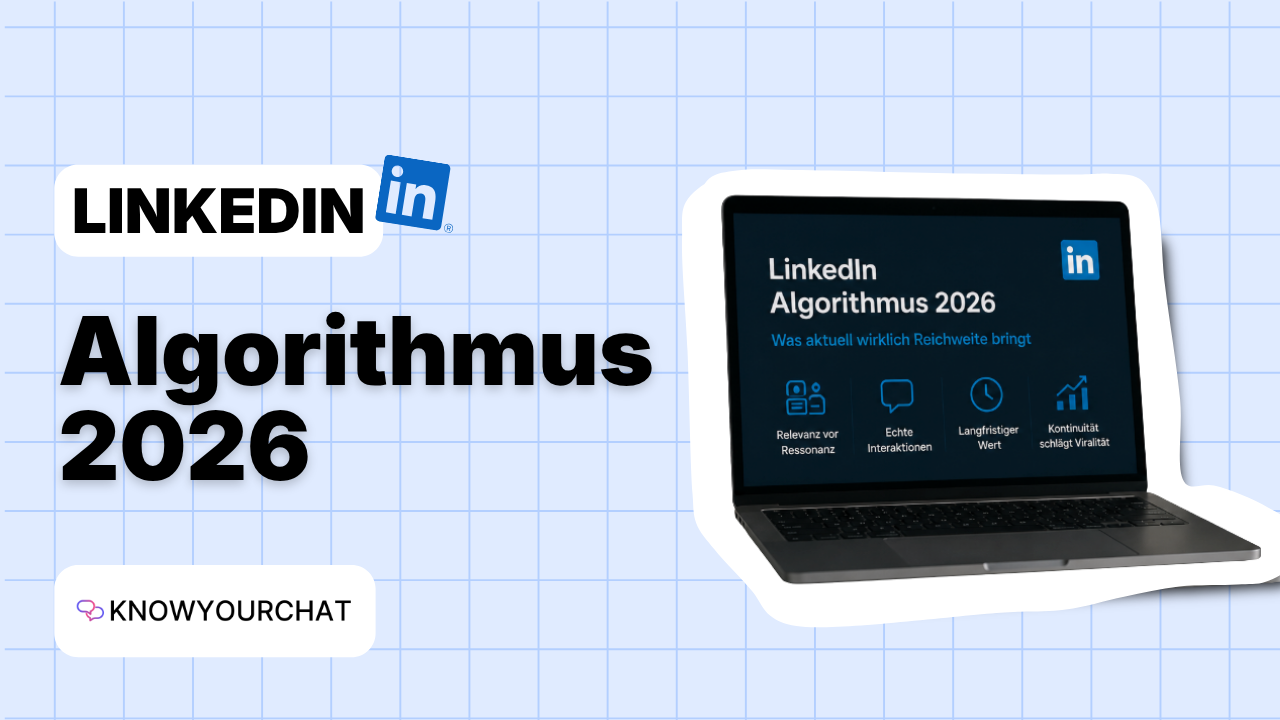
LinkedIn has fundamentally changed in recent years. What used to be primarily a digital network for resumes and contacts has become one of the most important platforms for organic reach in B2B. At the same time, the algorithm has evolved significantly – and with it, the rules of the game for content.
Many companies post regularly, invest time and resources, yet see hardly any growth. Others manage to generate high visibility and interaction with just a few posts. The difference rarely lies in the effort, but in understanding how LinkedIn evaluates content and which signals actually matter.
How the LinkedIn algorithm evaluates content
The LinkedIn algorithm works in a far more nuanced way today than it did a few years ago. While the focus used to be primarily on activity and simple interactions, the emphasis today is clearly on relevance and quality.
Fundamentally, every post goes through several phases. First, it is shown to a smaller circle, usually existing contacts or people with similar interests. In this phase, LinkedIn checks how users react to the content.
It is not just about whether a post is seen, but how intensively users engage with it. Dwell time, click behavior, and above all interactions play a central role. According to LinkedIn itself, content that triggers meaningful interactions and offers real value is given preference.
Only when a post convinces in this first phase is it distributed further and reaches larger audiences.
Why comments are the strongest lever
One of the most important recent developments is the clear prioritization of comments. While likes still play a role, they have lost a lot of weight.
Comments are a stronger signal for the algorithm because they require more engagement. A user has to actively engage with the content, form an opinion, and put it into words. That is exactly what shows LinkedIn that a post is relevant.
What is especially valuable is not just individual comments, but entire discussions. When a post generates multiple replies or a dialogue develops, the likelihood that it will be distributed further increases.
In practice, this means: content should not just inform, but deliberately encourage interaction.
The role of the first interactions
Another decisive factor is performance immediately after publication. LinkedIn first tests content in a limited environment and decides on further distribution on that basis.
This first phase is more critical than many people think. Posts that generate no reaction here quickly lose visibility. Content that triggers interactions early, on the other hand, gets distributed more widely.
This leads to a clear consequence: the timing, network, and opening of a post are decisive. Users decide within a few seconds whether to keep reading or keep scrolling. An unclear or sluggish opening often prevents even good content from having its full impact.
Why consistency matters more than individual viral posts
A common mistake in dealing with LinkedIn is focusing on individual "viral" posts. Many try to achieve as much reach as possible with a single post without considering the bigger picture.
The algorithm, however, evaluates not only individual pieces of content but also the long-term activity of an account. Anyone who posts regularly on specific topics is categorized more strongly within that topic area.
As a result, content is shown more precisely to relevant audiences. At the same time, the likelihood increases that posts interact with and reinforce each other.
Reach therefore does not come from individual peaks, but from continuity and thematic clarity.
Which content currently works particularly well
Even though the algorithm is complex, clear patterns can be identified.
Content works particularly well when it has a clear perspective, delivers real insights, and is relevant to the target audience. Posts that share experiences, address problems, or take a clear stance generate significantly more interaction than generic content.
One format that is currently gaining particular importance in this context is the LinkedIn newsletter.
Newsletters are deliberately given preferential distribution by LinkedIn because they create a stronger bond with the audience. Users actively subscribe to content and receive notifications as soon as new editions are published. This creates a significantly higher likelihood that content is not just seen, but actually read.
For the algorithm, newsletters are an especially strong signal. They show not only interest, but also recurring attention. Content is no longer consumed once, but followed regularly.
This has two decisive effects: on the one hand, the visibility of individual pieces of content increases because they are shown more precisely to interested users. On the other hand, a long-term connection develops between the account and the audience, which has a positive effect on all further content.
Especially in combination with classic posts, this creates a clear advantage. While individual posts generate attention, a newsletter provides continuity and depth. Topics can be covered in more detail, developed further, and built up in a structured way.
LinkedIn itself emphasizes that content with professional value and continuous relevance performs particularly strongly.
Generic content, pure advertising, or posts without a clear focus, on the other hand, perform less well. They may generate visibility, but rarely sustained interaction – and that is exactly what limits their reach.
The underrated factor: dwell time
Alongside interactions, another factor is playing an increasingly important role: dwell time.
LinkedIn measures how long users engage with a post. Do they read the entire text? Do they linger on a carousel? Do they interact afterwards?
These signals reveal how relevant a piece of content actually is. A post with high dwell time is more likely to be classified as valuable and distributed accordingly.
This has direct implications for content design. Content must not only attract attention, but also hold it.
Why many strategies fail
Many social media strategies fail because they look at the algorithm in isolation. They try to optimize individual factors without considering the overall process.
The LinkedIn algorithm, however, does not work like a single lever, but like a system. Several factors interlock and reinforce each other.
Without structure, every optimization remains piecemeal. With structure, an effect emerges that builds up across multiple pieces of content.
How KNOWYOURCHAT helps you use LinkedIn strategically
This is exactly where it becomes clear why a systematic approach is decisive.
KNOWYOURCHAT does not start with individual posts, but with the entire process behind them. The AI Crew helps you develop content in context rather than creating it in isolation.
An idea is not just translated into one post, but split into several approaches that build on each other. This creates a clear thematic line that the LinkedIn algorithm recognizes more easily.
This advantage becomes especially apparent with formats like LinkedIn newsletters. Content can be conceived not just as individual posts, but built directly as a series that develops across multiple posts.
In the AI Studio, this content stays connected. A topic can start as a short post, then be explored in depth in a newsletter, and picked up again later. This creates a structure that resonates much more strongly with both the algorithm and the audience.
At the same time, the AI Crew helps structure content so that it delivers the decisive signals – from a strong opening to clear prompts for interaction. Even longer formats like newsletters can be built deliberately this way without losing clarity.
The strategic level stays integrated, too. In the Strategy Hub, topics, goals, and KPIs are defined that all content is aligned with. This creates a connection between long-term strategy and day-to-day execution.
The result is a way of working that does not aim to optimize individual posts, but to build a system that generates reach continuously.
Conclusion
The LinkedIn algorithm does not reward short-term tactics, but sustained relevance.
Reach comes from content that is understood, read, and discussed. At the same time, the structure behind it plays a decisive role, because it determines whether content stays isolated or reinforces itself.
If you want to use LinkedIn successfully, you should focus less on individual tricks and more on the connection between your pieces of content.
In the end, it is not about outsmarting the algorithm.
It is about developing content that works logically for it.
Frequently asked questions about the LinkedIn algorithm
What is currently the most important factor for reach?
Comments and genuine interactions that show content is relevant.
How important is posting frequency?
Regularity helps, but thematic consistency is decisive.
Should I post content multiple times?
Yes, if it is developed further and adapted – not as a repetition, but as a continuation.