2026 FIFA World Cup: Big campaigns start long before kickoff
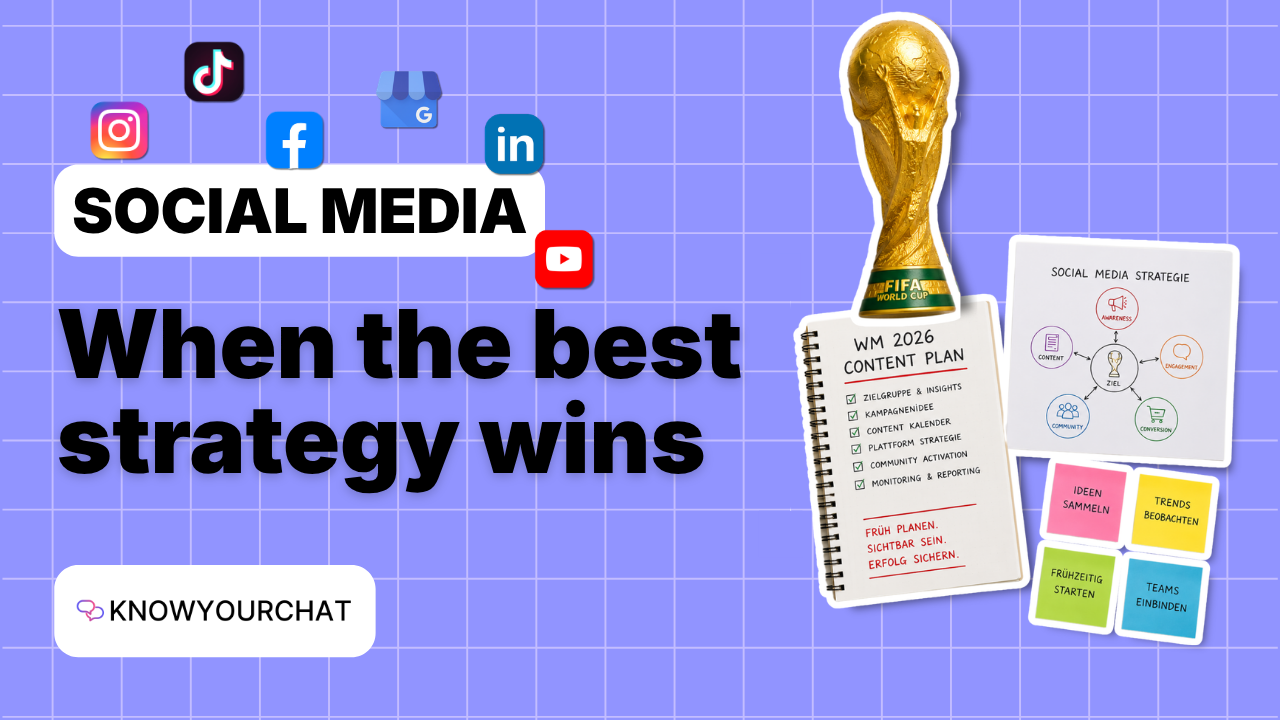
In two weeks, the 2026 FIFA World Cup kicks off in the USA, Canada, and Mexico. When host Mexico faces South Africa on June 11, 2026, millions of people will be sitting in front of their screens together.
For fans, the World Cup is one of the biggest sporting events in the world. For businesses, it is above all a phase in which attention, emotions, and digital conversations converge.
That's exactly why major events like the FIFA World Cup, the Super Bowl, or the Olympic Games are so valuable for marketing and social media. They create something that is increasingly hard to achieve in everyday communication: a shared moment that millions of people talk about at the same time. And precisely these moments are highly interesting for brands.
Why major events are so special in marketing
In everyday social media, businesses constantly compete for attention. Users scroll through feeds, content changes by the second, and even good posts quickly get lost without the right context. During major events, this starting position changes.
During a World Cup, conversations don't start with businesses. They are already there. People watch matches, discuss scenes, share emotions, react to results, and pick up memes or trends. So attention doesn't have to be created entirely from scratch. It has to be used wisely. That's the decisive difference.
A brand that communicates with relevance during such an event doesn't have to fight against public interest. It can plug into an existing conversation.
However, this only works if the campaign does more than adding a football to a graphic or publishing a generic "fingers crossed" post. Successful event marketing thrives on a brand understanding the moment, translating it into its own identity, and turning it into something genuinely interesting for its audience.
Why planning matters more than spontaneous reaction
At first glance, many successful social media moments look spontaneous. A quick post after a goal, a meme after a controversial scene, or a creative reaction to a viral moment. In reality, good spontaneity is almost always prepared.
Events like the Super Bowl have demonstrated this for years. Companies there don't just plan individual commercials – they plan entire communication systems. Campaigns are developed months in advance, social media workflows are prepared, reaction scenarios are rehearsed, and teams are organized so they can act quickly during the event.
Because a major event brings enormous opportunities, but also enormous speed.
During a tournament, trends emerge within minutes. Content that gets published too late quickly feels outdated. At the same time, businesses can't react arbitrarily, because every piece of communication has to fit the brand. That means: companies need preparation without becoming rigid.
They need to know in advance which topics they want to own, which tone fits, which approvals are required, and which formats work on which platforms. Only then can spontaneous content be executed quickly and cleanly during the event at all.
Check24 and the free jerseys: why this campaign was so powerful
A particularly well-known example from Germany is Check24.
During Euro 2024, the company generated enormous attention with free Germany jerseys. According to media reports, five million jerseys were distributed, and for the 2026 World Cup, Check24 is again running a similar campaign. To get the free jersey, users had to download the app, register, and provide personal data. This created not only reach, but also clear lead and customer access.
That's the decisive point. The jerseys weren't simply a gift. They were an entry point.
Check24 connected an emotional football event with a concrete marketing mechanism. People wanted to be part of the campaign, registered, downloaded the app, and thereby became reachable for Check24. At the same time, the campaign spread organically, because people showed their jerseys on social media, talked about them, and made others aware of the campaign.
This created an effect that classic advertising can hardly produce. The campaign combined reach, visibility, brand loyalty, and lead generation in a single mechanism. Users weren't just reached. They were actively pulled into the campaign.
What made it especially powerful was that the campaign didn't feel like classic advertising. Many people perceived it as a benefit, not an advertising message. That dramatically lowered the barrier to entry. Anyone who wanted a free jersey automatically engaged with Check24. For businesses, that's the real lesson.
A good event campaign doesn't just generate attention. It builds a path along which attention turns into concrete action.
What businesses can learn from this
The success of such campaigns rarely comes from a single good idea. What matters is how the idea is translated into a system.
A World Cup campaign can look very different from one company to the next. A business can launch a giveaway, develop a content series around match days, involve employees, use regional football connections, tie discount campaigns to results, or pick up community questions. Smaller businesses, too, can leverage major events without spending multi-million budgets.
What matters, however, is that the activity delivers more than pure visibility. The decisive question isn't just: "How do we get attention?" But: "What should come out of this attention?"
Should the campaign generate new leads? Should it attract applicants? Should it activate customers? Should it build community? Should it make a brand more likeable and approachable?
Without this clarity, event campaigns often don't get past nice social media posts. With a clear objective, on the other hand, they can have measurable impact. This is exactly where strategic social media begins.
Why social media gets faster and more complex during the World Cup
During a World Cup, it's not just the amount of content that increases. The speed changes too.
A goal, a missed penalty, or a controversial decision can spark discussions within minutes. Brands that want to react to this have to be fast. At the same time, they must avoid appearing inappropriate, arbitrary, or opportunistic. That's a demanding balance.
Because real-time marketing doesn't mean reacting to everything. It means recognizing the right moments and only becoming active when the connection to the brand makes sense.
Many businesses don't fail here because of a lack of ideas. They fail because of coordination, approvals, and a lack of overview.
A post has to be created, reviewed, adjusted, and published. With multiple platforms, different formats, text lengths, timings, and audiences come into play. And when several people are involved, a simple idea quickly turns into a complicated process. While the team is still coordinating, the moment is often already over.
Why early planning still remains decisive
Even though the World Cup is just around the corner, the topic fundamentally shows why early planning is so important in social media marketing.
Major events are plannable. The time frame is fixed, match days are known, audience behavior is foreseeable, and many communication opportunities can be prepared. Businesses can therefore decide long before the event which role they want to play.
They can prepare which campaign logic they'll use, which formats they need, and which content should appear before, during, and after the event.
Before the event, it's usually about anticipation, excitement, and activation. During the event, it's about reaction, community, and visibility. After the event, it's about evaluation, follow-up, and the question of how to continue using the attention gained. These three phases are often underestimated.
Many campaigns end exactly when they should actually be continued. New contacts, interactions, comments, or leads don't emerge during an event just to be counted once. Afterwards, they need to be processed, categorized, and turned into further communication. Only then does event attention become real marketing value.
How KNOWYOURCHAT supports campaigns
This is exactly where KNOWYOURCHAT becomes relevant. Successful campaigns around major events don't just need ideas. They need structure.
With KNOWYOURCHAT, social media campaigns can be planned, organized, and executed centrally. Content for Instagram, Facebook, LinkedIn, TikTok, or YouTube can be prepared, coordinated, and published in one place. Teams keep an overview of which content is scheduled, which posts need approval, and which topics are still open during the event.
Especially for a World Cup campaign, this is decisive.
Because during this phase, businesses often work with several content streams at once. There are scheduled posts, spontaneous reactions, community requests, giveaways, story updates, and possibly lead campaigns. Without a central structure, this quickly turns into a patchwork of tools, chats, and last-minute decisions.
KNOWYOURCHAT helps bring order to exactly this process.
Approvals can be mapped cleanly. Responsibilities stay clear. Content doesn't have to be coordinated across multiple channels. At the same time, the AI Crew helps develop ideas further, create variants, and prepare content to fit each platform.
That doesn't mean AI takes over the campaign. The advantage is rather that teams get from an idea to an executable post faster, without losing control over tone, strategy, and quality.
Why insights after the event are just as important as planning before it
Another point is often forgotten in event campaigns: the evaluation.
After a campaign, many businesses only look at reach or likes. But that's not enough.
What matters is which content really worked. Which posts were shared? Which formats triggered comments? Which platform performed best? Which topics generated leads or concrete inquiries?
Major events in particular produce valuable data that can be used for future campaigns.
KNOWYOURCHAT bundles insights across platforms and helps teams not just see individual numbers, but recognize patterns. That way, a World Cup campaign becomes not just a one-off project, but a foundation for better decisions in the future. This is especially important because big events always come back.
After the World Cup is before the next sporting event, the next trade fair, the next regional event, or the next seasonal campaign. Businesses that learn from their campaigns build a stronger system with every initiative.
The real opportunity for businesses
The 2026 World Cup shows very clearly how modern marketing works. It's no longer just about being as loud as possible. It's about recognizing relevant moments, using them in a way that fits your own brand, and turning them into concrete action.
Check24 shows how powerful this effect can be when reach, emotion, and lead generation come together. But smaller businesses can benefit from this logic too.
Not every business needs a campaign seen by millions. Many need, above all, a clear idea, good preparation, and processes that allow content to be executed quickly and reliably.
That's exactly where the real strength of social media around major events lies. They create moments in which people are more attentive, more emotional, and more active than usual.
Those who use these moments well-prepared can achieve far more than with ordinary everyday content.
Conclusion
The 2026 FIFA World Cup in the USA, Canada, and Mexico is not just a sporting event. It is a global communication moment. For businesses, this creates enormous opportunities: more attention, stronger interactions, organic reach, and at best even concrete leads.
But successful campaigns rarely happen by accident. They need a clear idea, early planning, fast execution, and a structure that works even under time pressure.
Major events like the World Cup or the Super Bowl therefore show very clearly where social media marketing is heading.
It's not individual posts that determine success. What's decisive is whether businesses can turn attention into a system that creates impact.