The Best Times to Post on Social Media? When You Should Really Be Posting
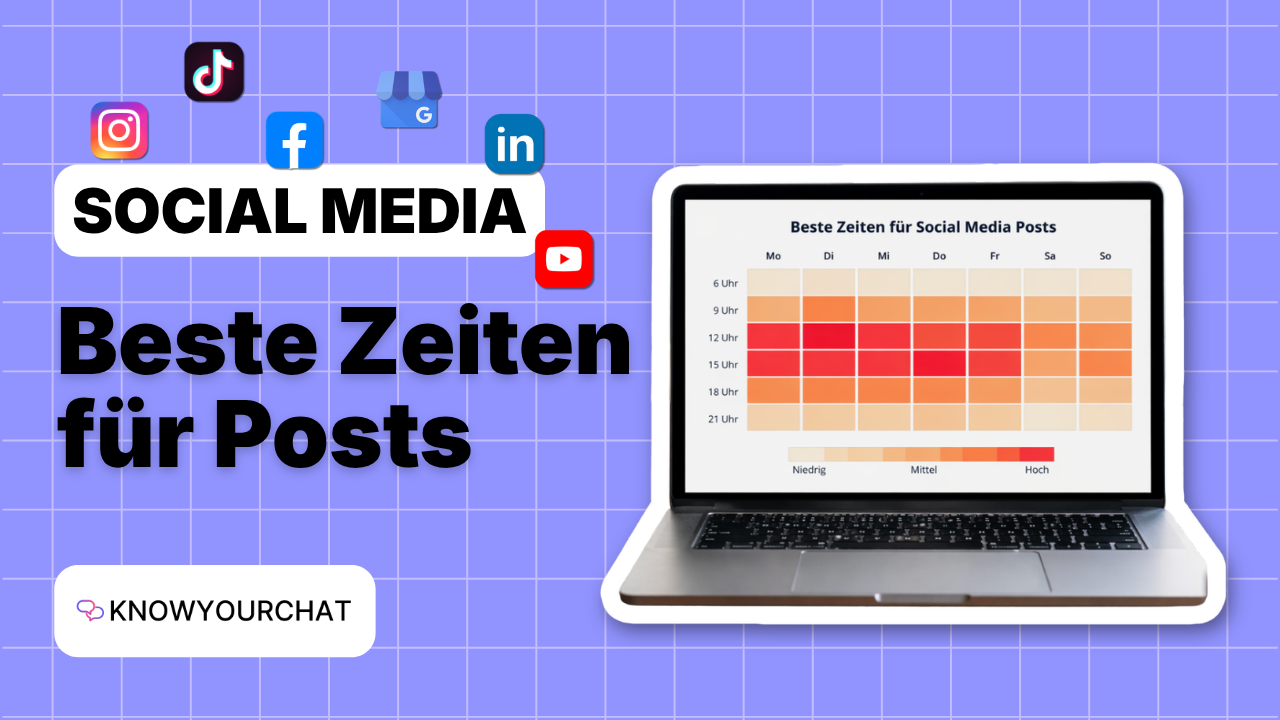
The question of the right time to post on social media is one of the most searched-for of all. At the same time, it's one of the most frequently misunderstood.
Many people look for fixed times of day. Nine in the morning, noon, or around eight in the evening. At first glance, these recommendations seem sensible because they're easy to implement. In practice, however, they rarely deliver the desired effect.
The reason is that the optimal time doesn't exist in isolation. It's not a fixed value, but always emerges from the interplay of audience, content, and platform. Anyone who tries to determine it in isolation will inevitably end up with imprecise results.
Why one-size-fits-all posting times are misleading
General recommendations are usually based on averages. They reflect when many users are generally active. What they don't take into account, however, is what that activity actually looks like.
There's a crucial difference between "being online" and "being ready to absorb content". Many people scroll through social media without engaging deeply with content. Others, however, deliberately take time to read, understand, or react to content.
A post that appears in exactly that second moment has a significantly higher impact – regardless of whether it was published at a classic "best practice time".
The platform's influence on timing
Every platform follows its own logic. This logic determines not only which content gets distributed, but also when it has its greatest impact.
On platforms like LinkedIn, the usage context is heavily shaped by the workday. Content is often consumed during transition phases – in the morning, during breaks, or at the end of the workday. At the same time, users here are more willing to engage deeply with content.
On platforms like Instagram or TikTok, this behavior shifts more into leisure time. Content is often consumed in more relaxed moments, which makes different time windows relevant.
The crucial point, however, is that these patterns only offer rough guidance. Within every audience, there are distinct habits that carry far more weight.
Visibility, relevance, and the dynamics of algorithms
The timing of a post primarily influences the first phase of its distribution. In the first minutes and hours, it's decided whether a post gets initial attention.
Algorithms evaluate how quickly and intensely users react. A post that receives early interactions is shown more often and reaches more people. A post without an early reaction, on the other hand, quickly loses visibility.
Timing works like a catalyst here. It can amplify good content, but it can't save bad content.
At the same time, many platforms have evolved in recent years. Content is no longer displayed purely chronologically, but can also regain relevance later on. This means a good post can still build reach hours or days later.
The role of consistency in user behavior
An often underestimated factor is your audience getting used to you. When content regularly appears at similar times, a certain expectation develops.
Users begin to notice content in these time windows, consciously or unconsciously. This regularity can lead to posts being recognized faster and consumed more often.
Consistency affects not only the audience, but also the platform itself. Regular activity signals stability, which can have a positive effect on how content is distributed.
Timing as part of the overall content system
A common mistake is treating timing as an isolated measure. In practice, however, it's closely tied to the entire content process.
The best publishing time is of little use if content isn't ready on time or has to be postponed at short notice. Unclear workflows mean that even good time windows can't be used.
This is exactly where the importance of a structured workflow shows. When ideas are developed early and content is produced efficiently, timing can be controlled deliberately. Content is then not only better in quality, but also available at the right moment.
In practice, it's exactly this connection that makes the difference. Systems that link content creation and planning make it possible to actively shape timing instead of leaving it to chance. This is exactly where solutions like KNOWYOURCHAT come in, mapping this process into one seamless workflow.
The difference between planned and spontaneous content
Timing is often equated with planning. In reality, the best performance often comes from a combination of both.
Planned content provides consistency and structure. It covers core topics and ensures that content appears regularly.
Spontaneous content, on the other hand, reacts to current events, trends, or situations. It can generate particularly high attention because it's immediately relevant.
The challenge is to connect the two. Without structure, spontaneous content becomes chaotic. Without flexibility, planned content stays rigid.
Modern systems enable exactly this connection. They create a framework in which content can be planned, while leaving enough room to react spontaneously.
How to develop your own optimal timing
The optimal time doesn't emerge from a one-off analysis, but from continuous observation.
It's about recognizing patterns. When do particularly many interactions happen? When do users stay with content longer? And at what times do posts achieve their greatest reach?
These insights develop over time. The more content is created and analyzed, the clearer your own profile becomes.
A structured approach ensures that these insights aren't lost, but can be used deliberately. Content isn't just published – it's understood.
What can concretely help you with this
Timing isn't an isolated lever, but part of a larger system. It only unfolds its full effect when content creation, planning, and analysis are connected.
This is exactly where modern platforms come in, bringing these processes together. Instead of looking at individual steps separately, a seamless workflow emerges in which content can be developed in a structured way and published deliberately.
With KNOWYOURCHAT 2.0, this approach is implemented consistently. The AI Crew not only supports content creation, but also brings existing data and metrics into the decision-making. On this basis, it can give concrete recommendations on when content will have the greatest impact.
In the AI Studio, this content is then taken further directly and moved into planning. The result is a process in which timing is no longer guessed, but decided on solid ground.
For many teams, this means they no longer have to rely on generic best practices, but can recognize and use their own data-driven patterns.
Conclusion
The right time for social media posts isn't a fixed hour, but the result of a system that works.
If you understand your audience, develop content consistently, and structure your processes clearly, you will automatically recognize and use better time windows.
In the end, it's not about hitting the perfect moment.
It's about being permanently ready to use it.